

Tabi
Organization, Map, Social
Role
Platforms
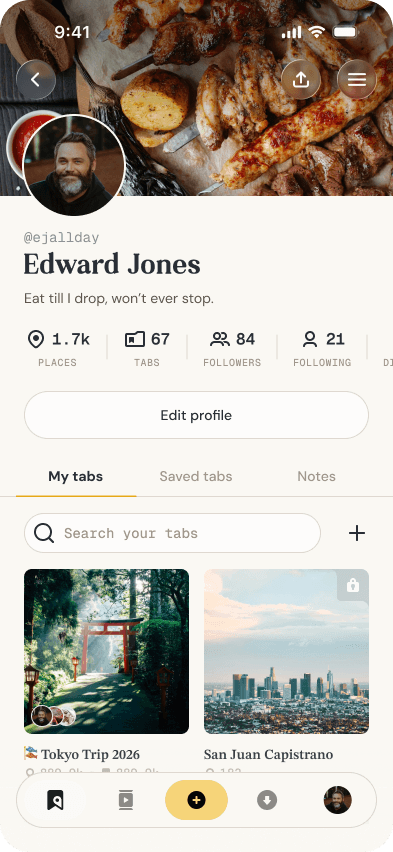
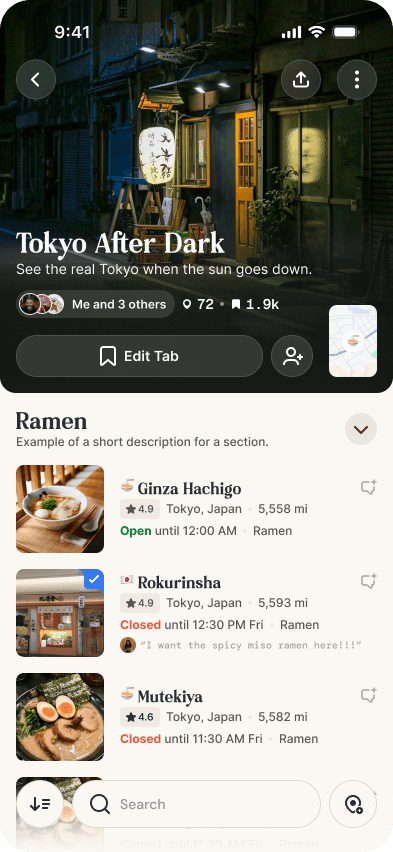
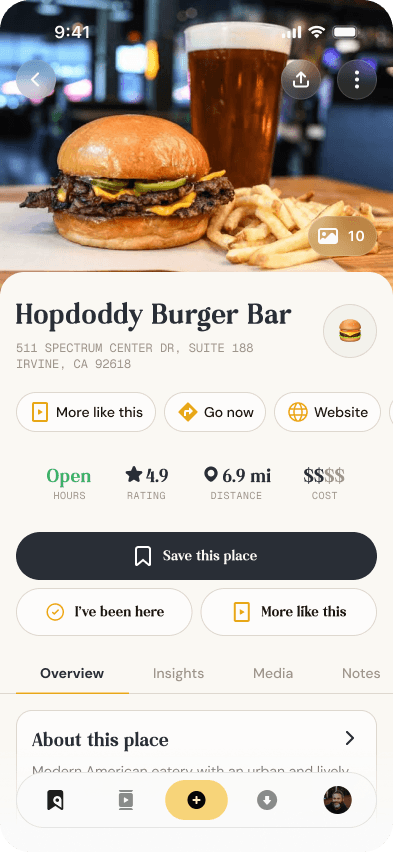
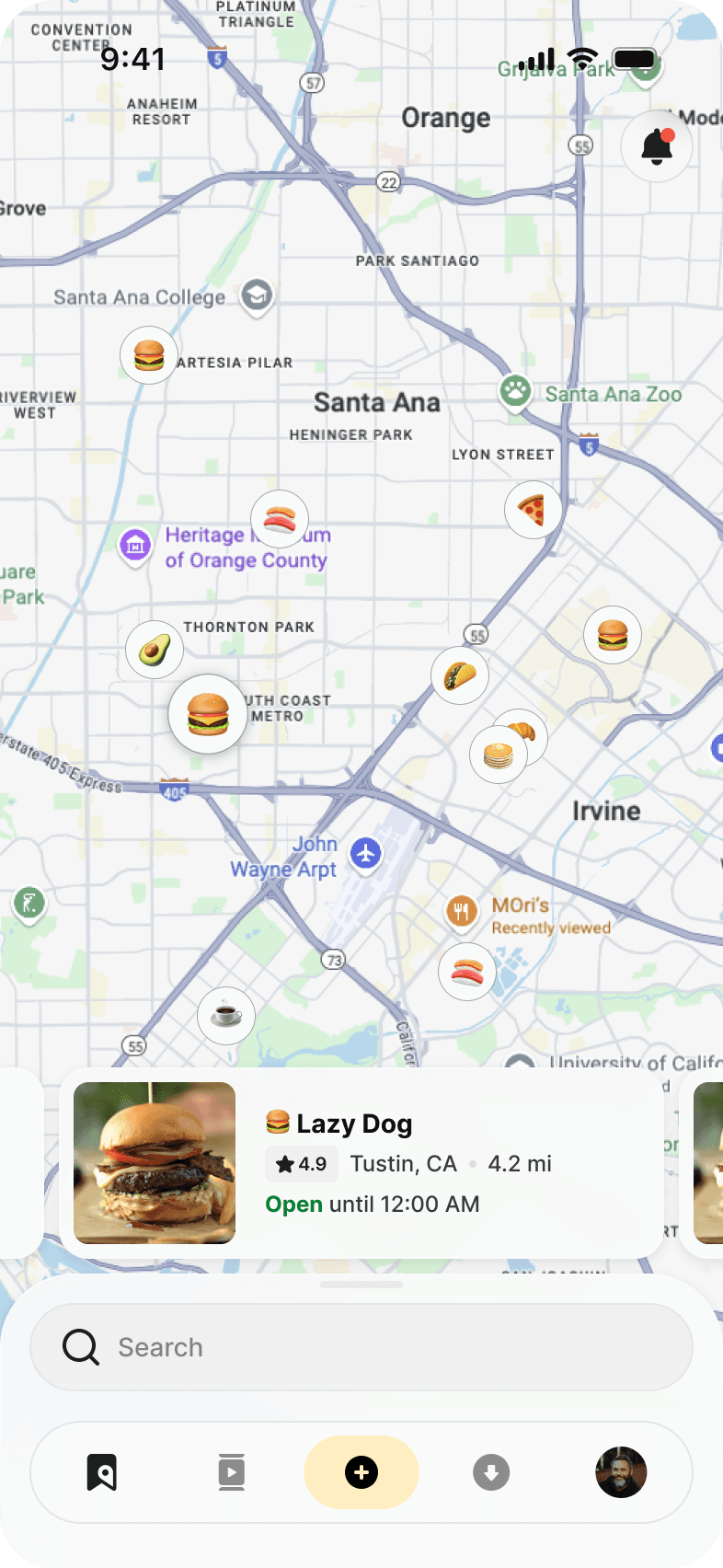
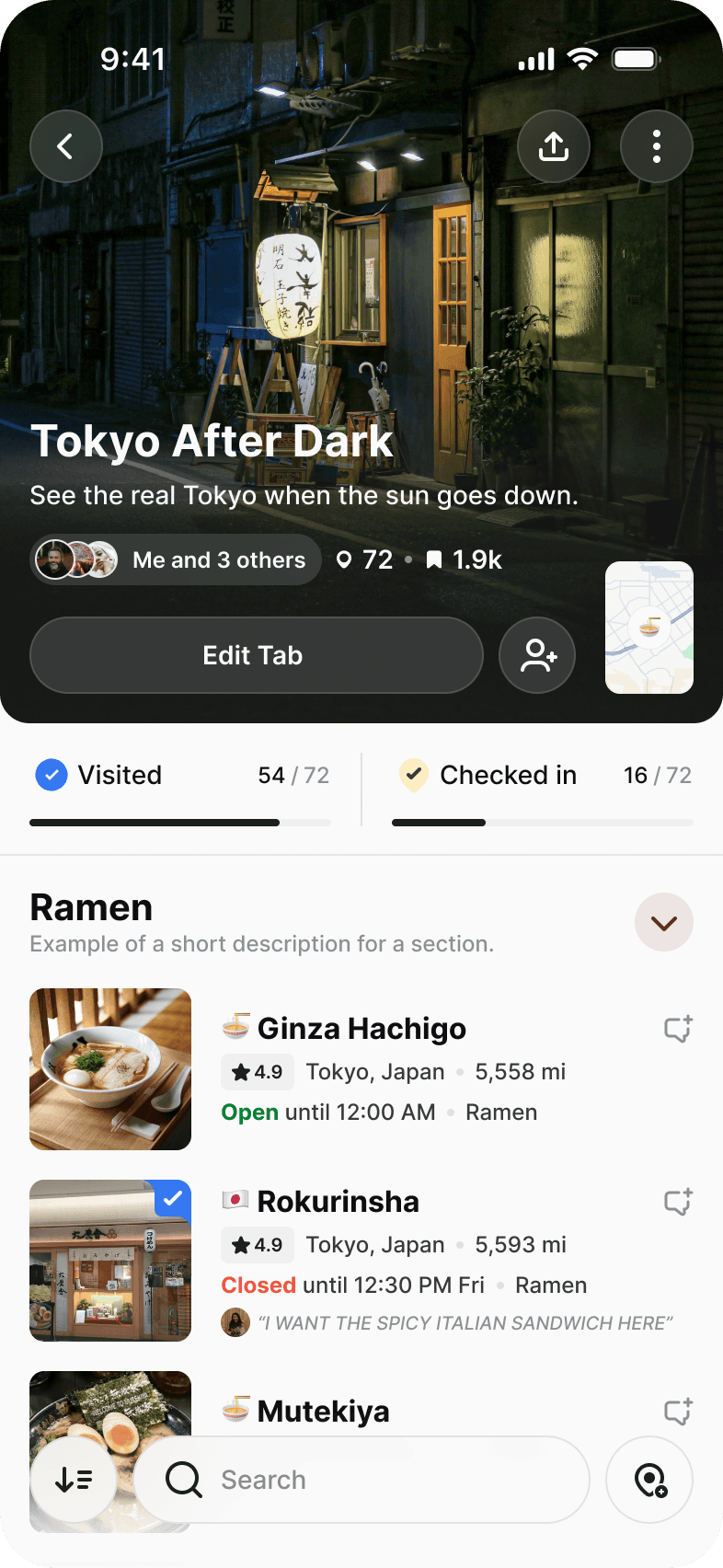
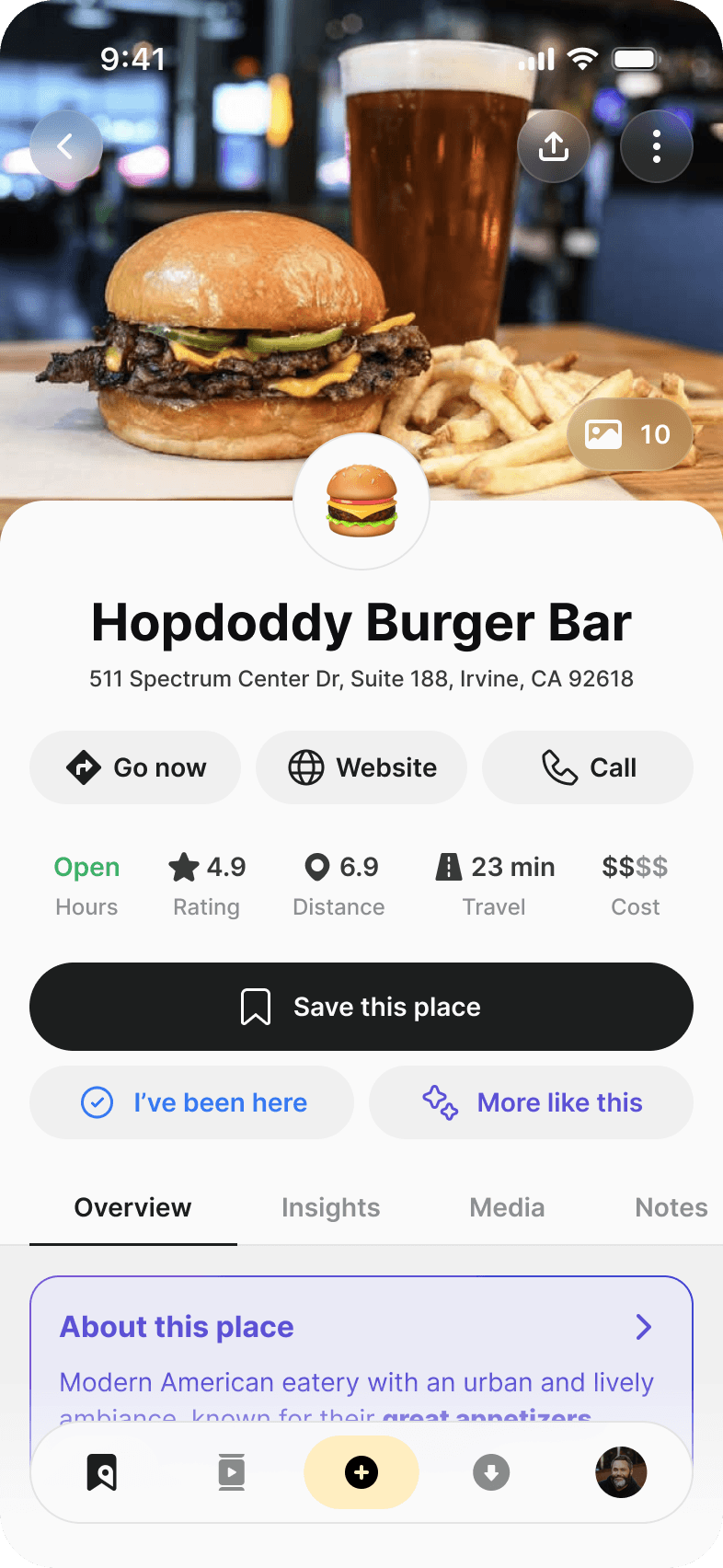
I am the founding product designer of Tabi, a mobile app that gives users the power to save and organize the places they want to visit from the social media posts they come across. Tabi has proven to help our users turn posts into places, and to convert fragmented social media inspiration into structured, usable intent.
Users
Monthly retention
Stage
The Question
How it started
My team and I came up with this idea while working another project, wondering if there was a good solution for saving and organizing all of the places we were interested in on social media. There wasn’t, so we built it ourselves, starting by working to identify our core demographic.
Understanding the audience
To make sure we were addressing a real problem, I ran a series of qualitative interviews with frequent social media users that routinely saved posts related to restaurants, travel, and other points of interest. I asked each participant to walk me through the steps of when and how they document the places that they’re interested in visiting that they found through social media. To follow that up, I asked how often they revisited these posts and how often they would actually go to these places.
The results were very clear:
This means that saving did not equal intent or planning, but instead served as a low-friction bookmark. Therefore, the real problem is retrieval and activation, not saving.
User personas
Using this information, I identified three primary archetypes that I felt represented our core demographic:
The Passive Saver
Rarely or never revisits their saves.
Behavior
Saves frequently
Little to no organization
Very rarely converts into action
To this user, saving feels productive without needing any commitment
Tabi needs to improve visibility of saves. Saved content should be easily actionable, not buried.
The Intentional Organizer
Uses collections and occasionally revisits their saves.
Behavior
Saves frequently
Creates collections according to theme or trip
Still struggles to take action around places
User still has to scroll through all of their saves and watch any relevant content to find the places they’re searching for.
Tabi needs to extract important place data and make it accessible, in comparison to unstructured content.
The Social Planner
Motivated by shared experience
Behavior
Sends posts to others
Typically coordinates through other means of communication
Has to go back through DMs and rewatch content to find places
Coordination can be difficult when users are sending posts to each other on one platform and making plans on another
Tabi needs to allow for easy collaborative planning around saved places.
The Power Saver
Maintains external notes or spreadsheet
High intent, high effort
Behavior
Takes extra steps to externalize and/or organize
Refers to saves regularly
Can find information consistently
This process is time consuming, as the user has to manually duplicate the place information they’ve found
The research revealed a clear disconnect between discovery and action. While every participant used the native “save” features to collect the places they find online, very few had any kind of reliable system for retrieving or acting on those saves later.
The existing save functionality treats saved content more like a media archive than an organized directory, forcing users to browse thumbnails and rewatch videos to get the place information they’re looking for.
This presented us with the opportunity to bridge the gap with a product that turns the places people discover online into places they visit in real life.
Design goals
1
Extract place information from posts automatically
Reduce the friction of turning inspiration into information
2
Create a dedicated system for organizing places
Move beyond the generic "saved posts" toward meaningful collections
3
Support the social coordination around places
Allow users to collaborate on their tabs together
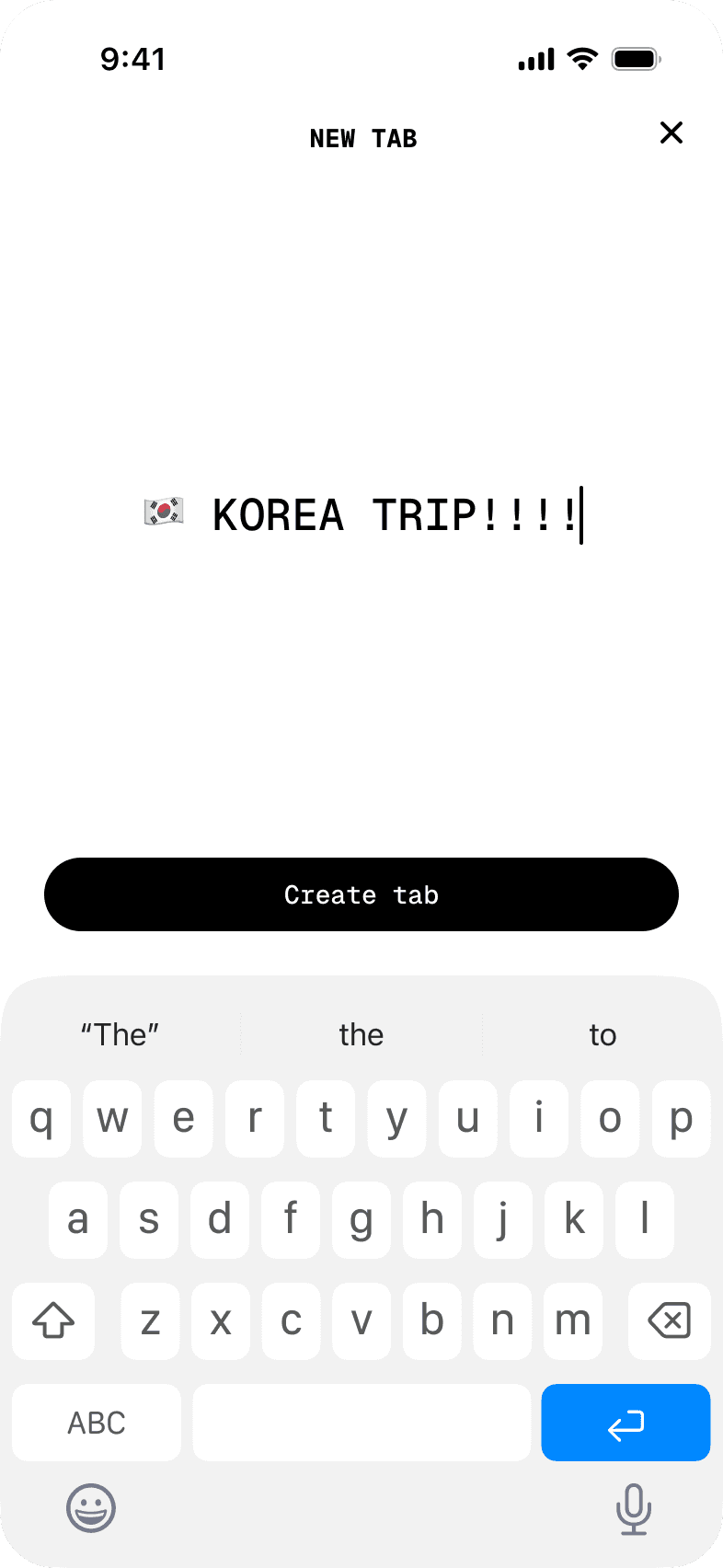
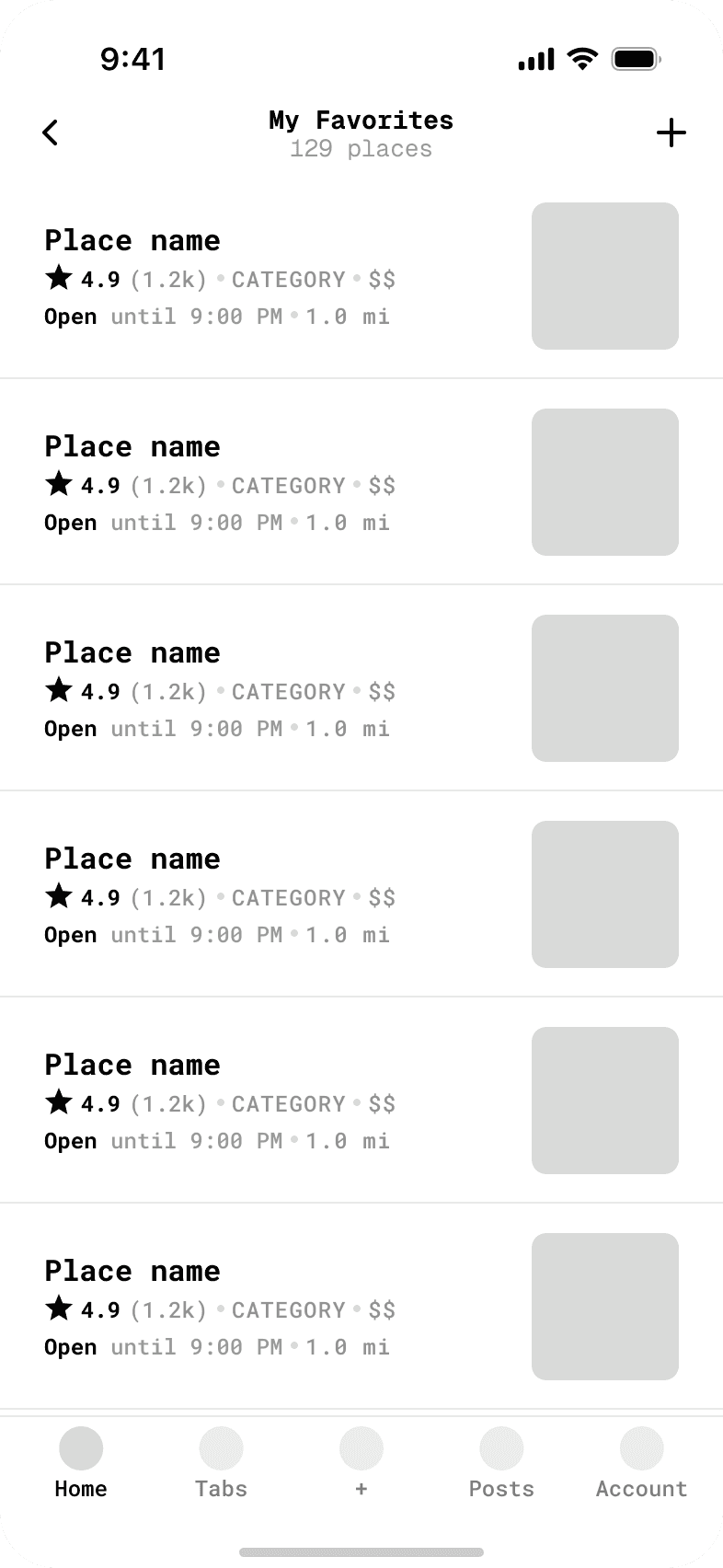
Wireframing
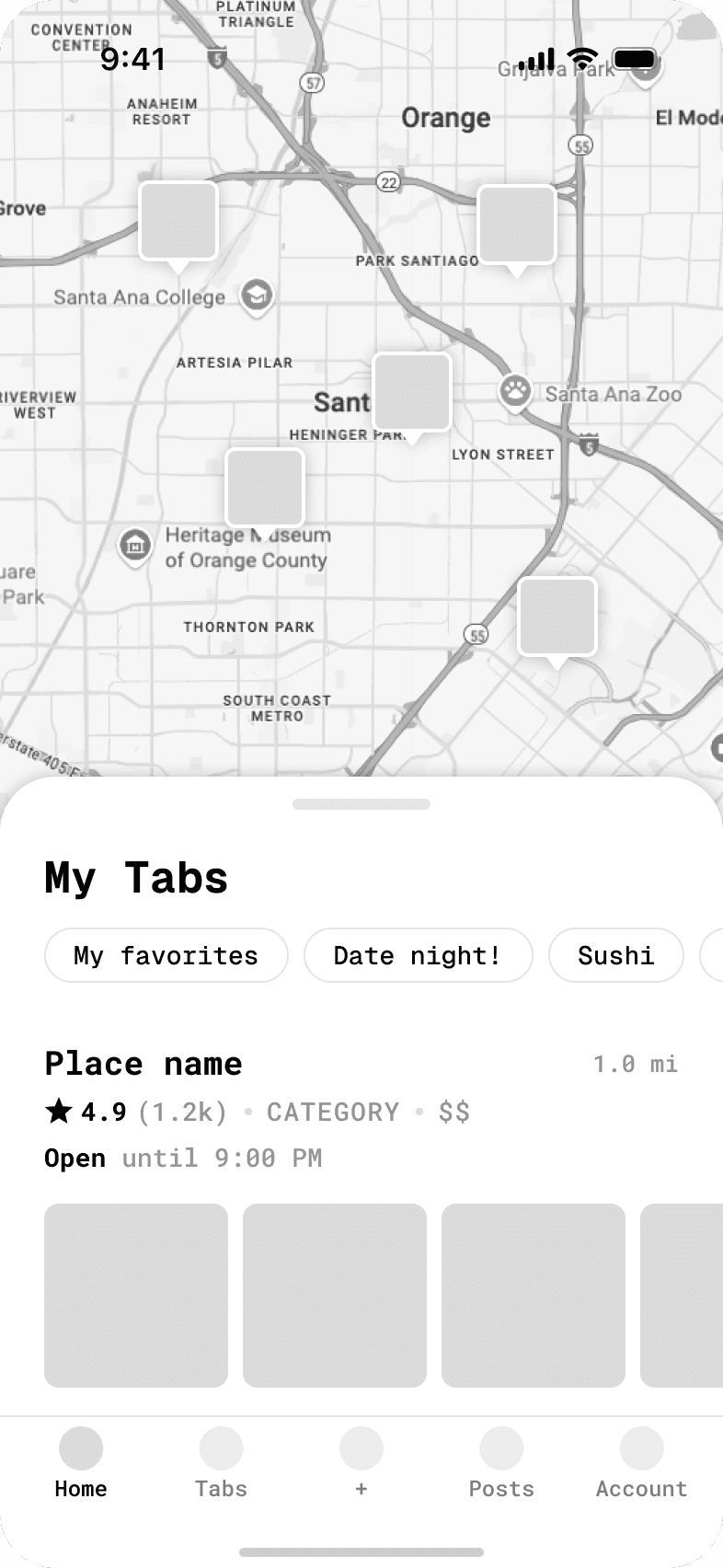
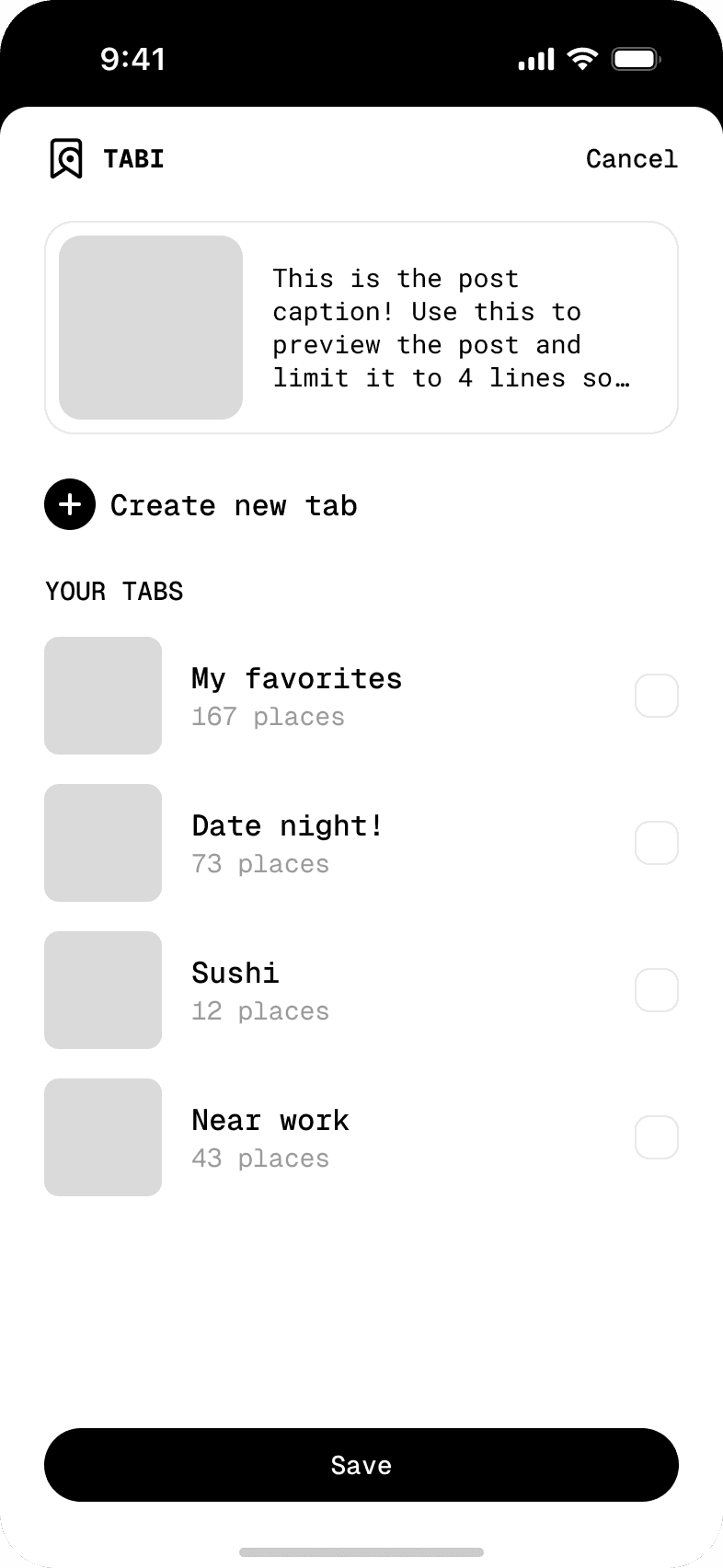
With the personas and design goals in mind, I designed a set of wireframes to review with my team.
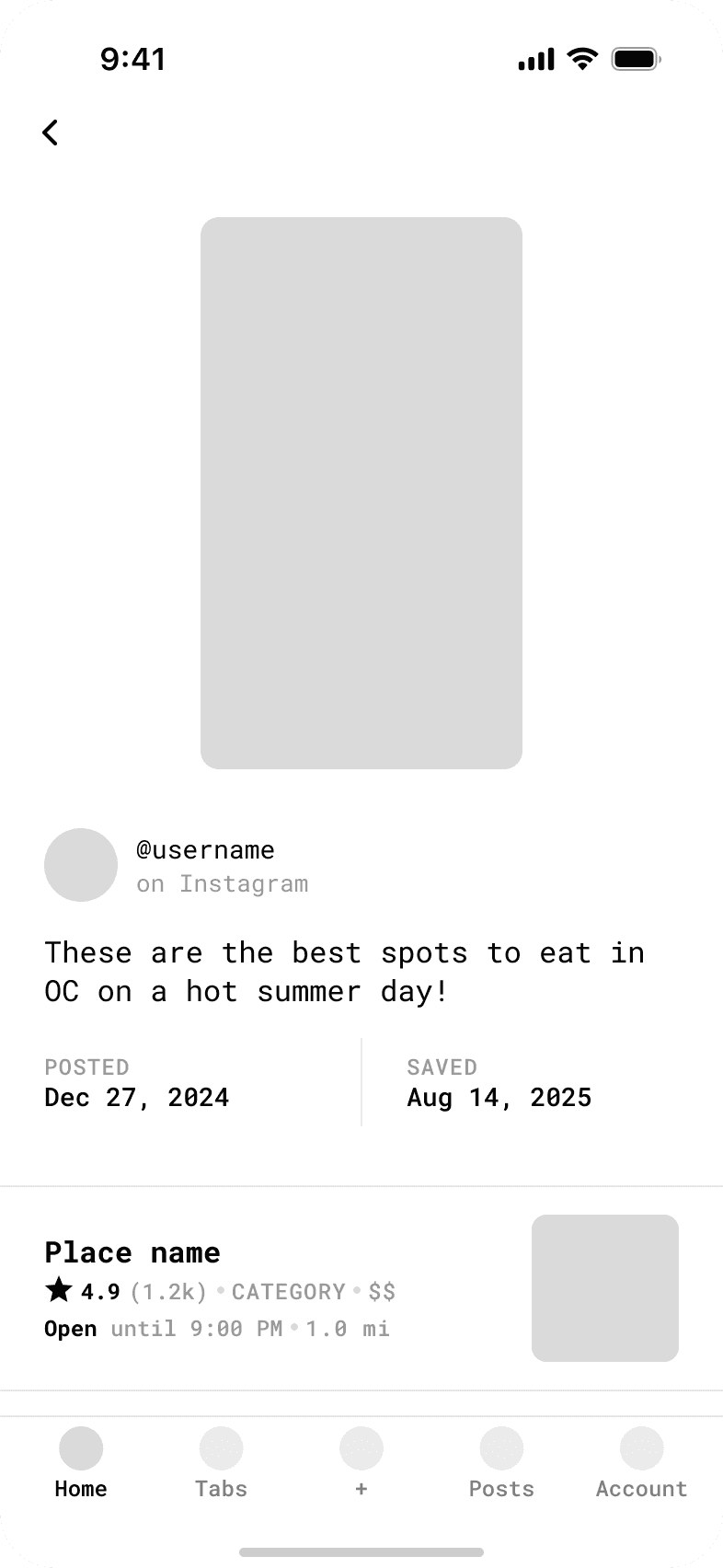
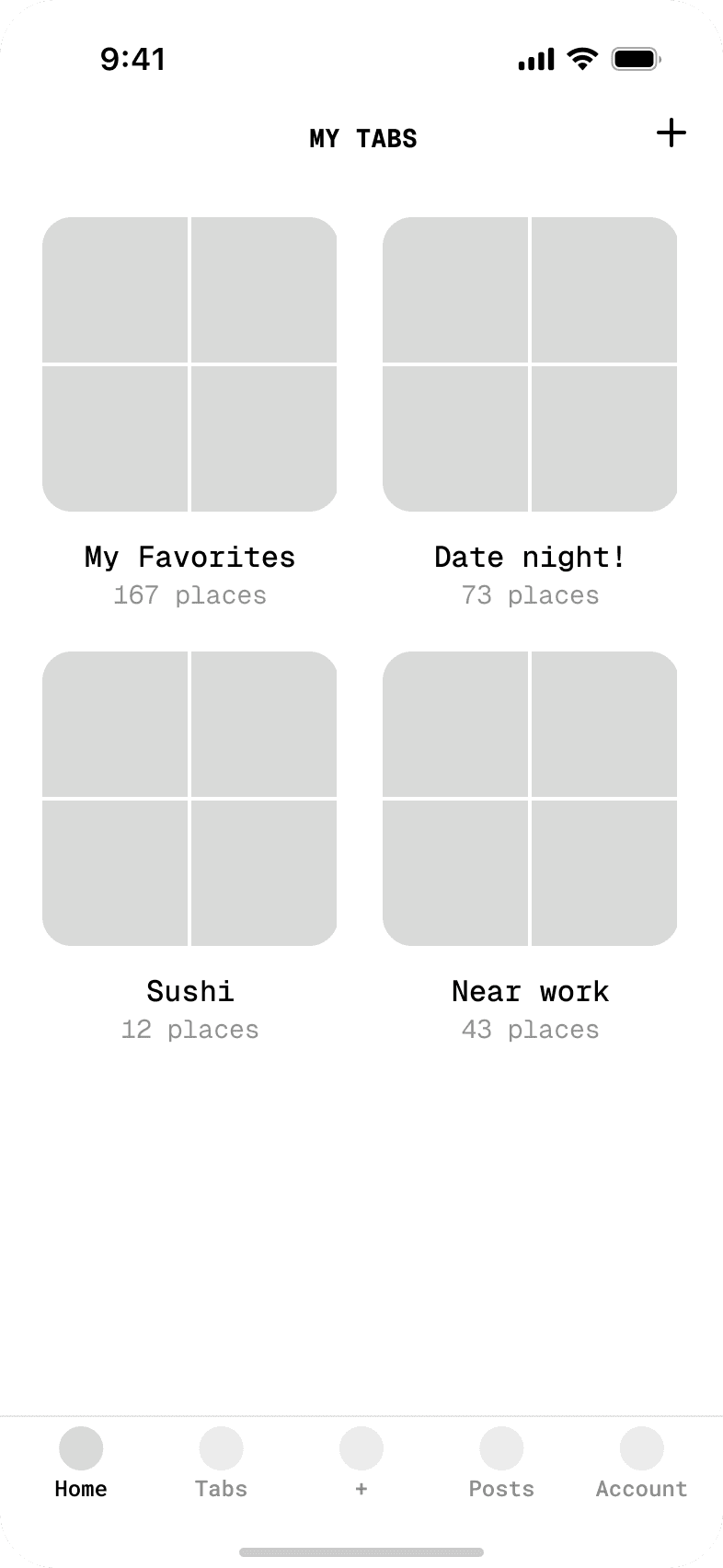
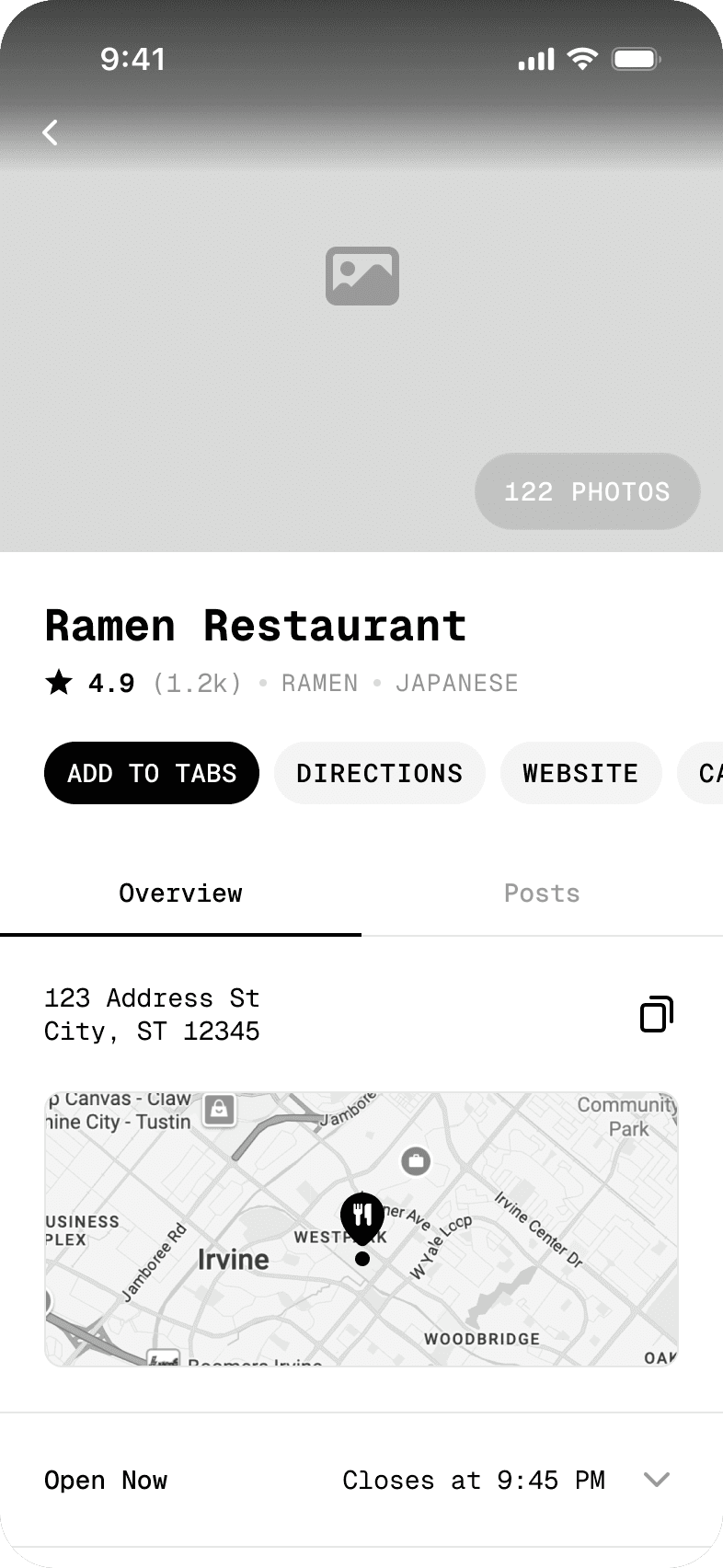
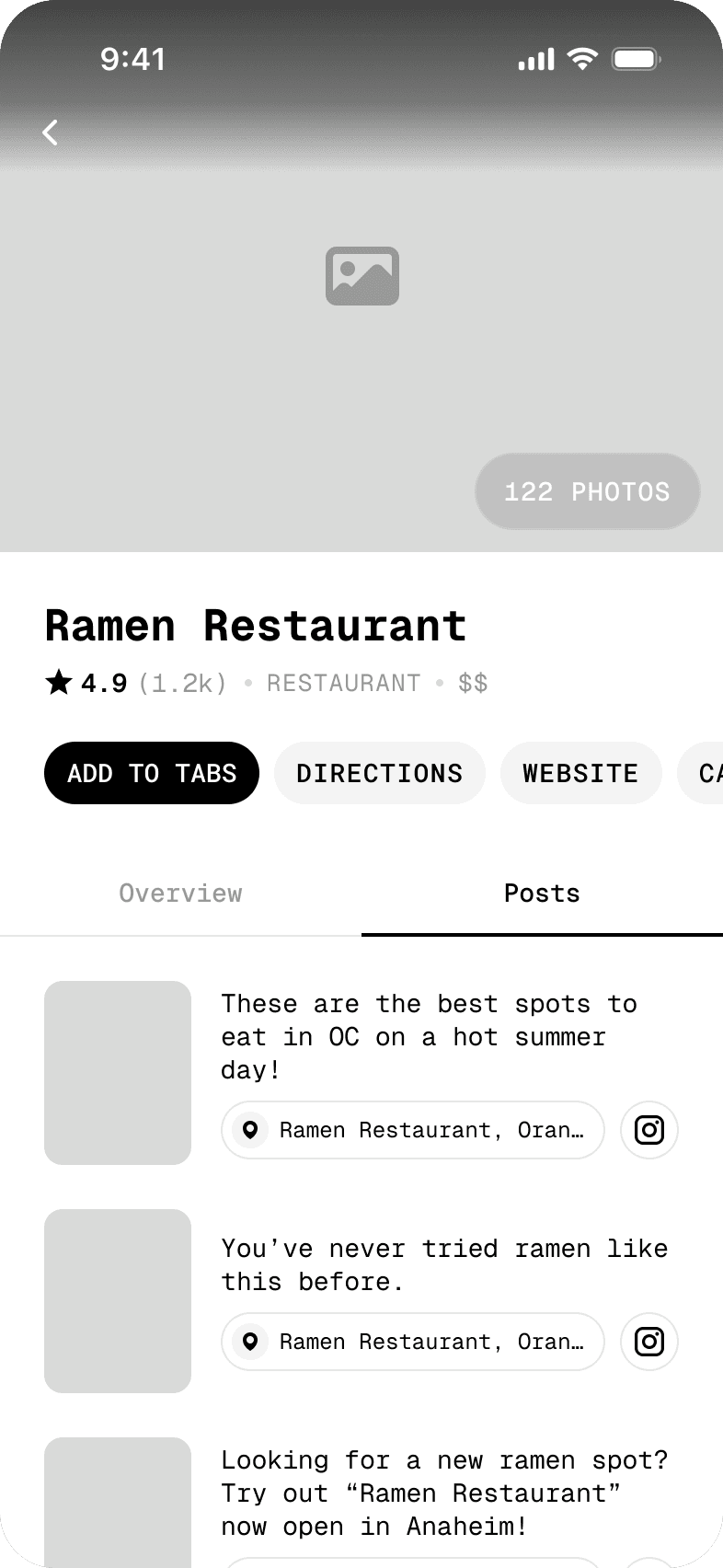
High-fidelity
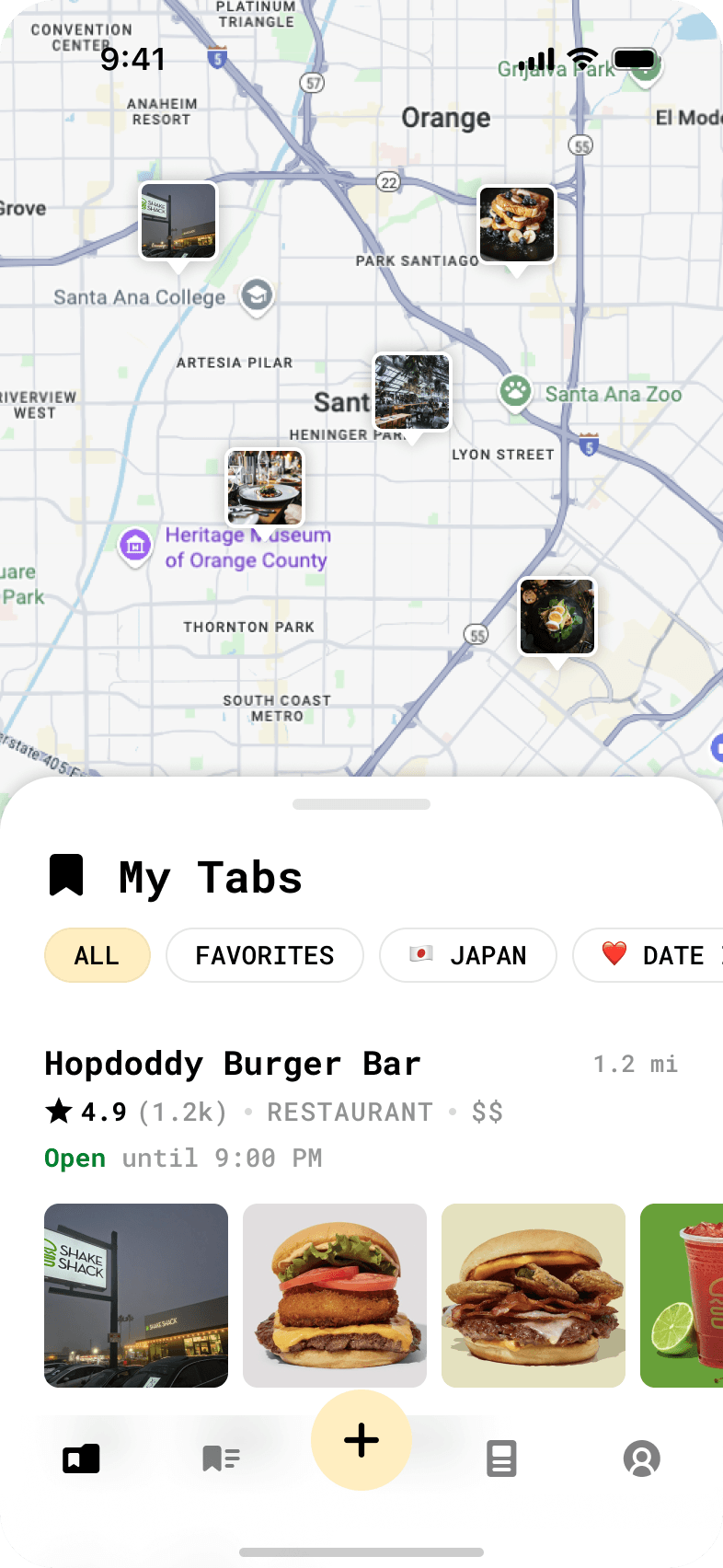
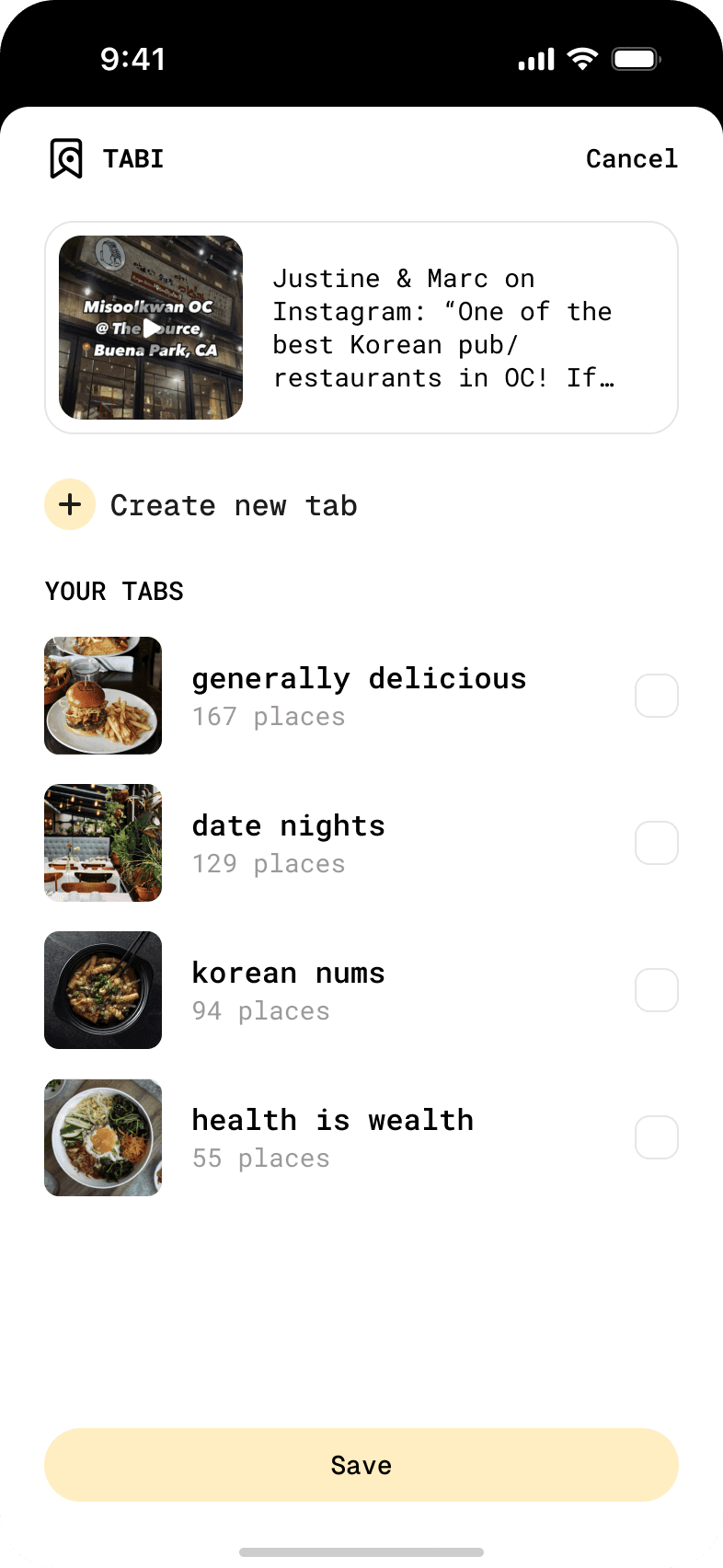
After confirming our direction with wireframes, we moved into high-fidelity designs and started development very quickly.
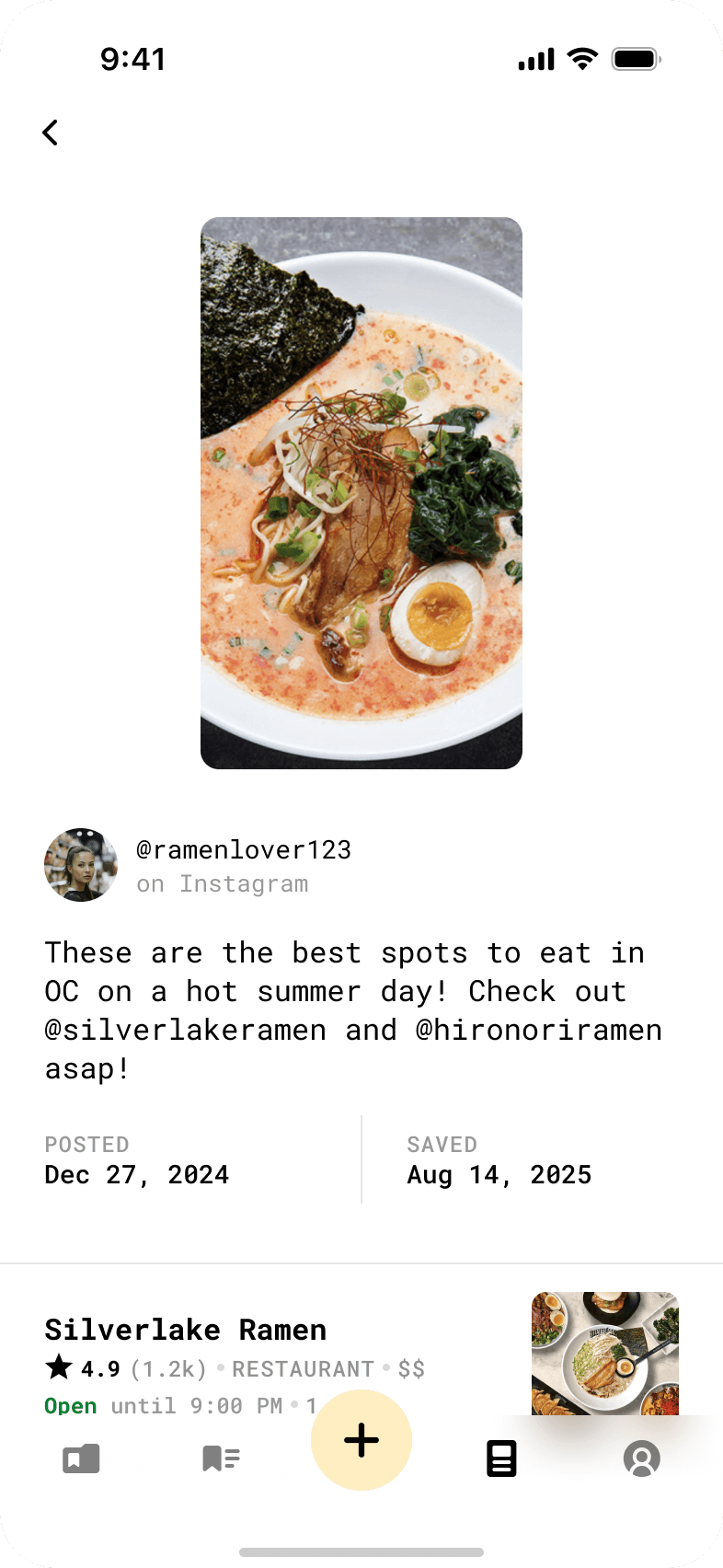
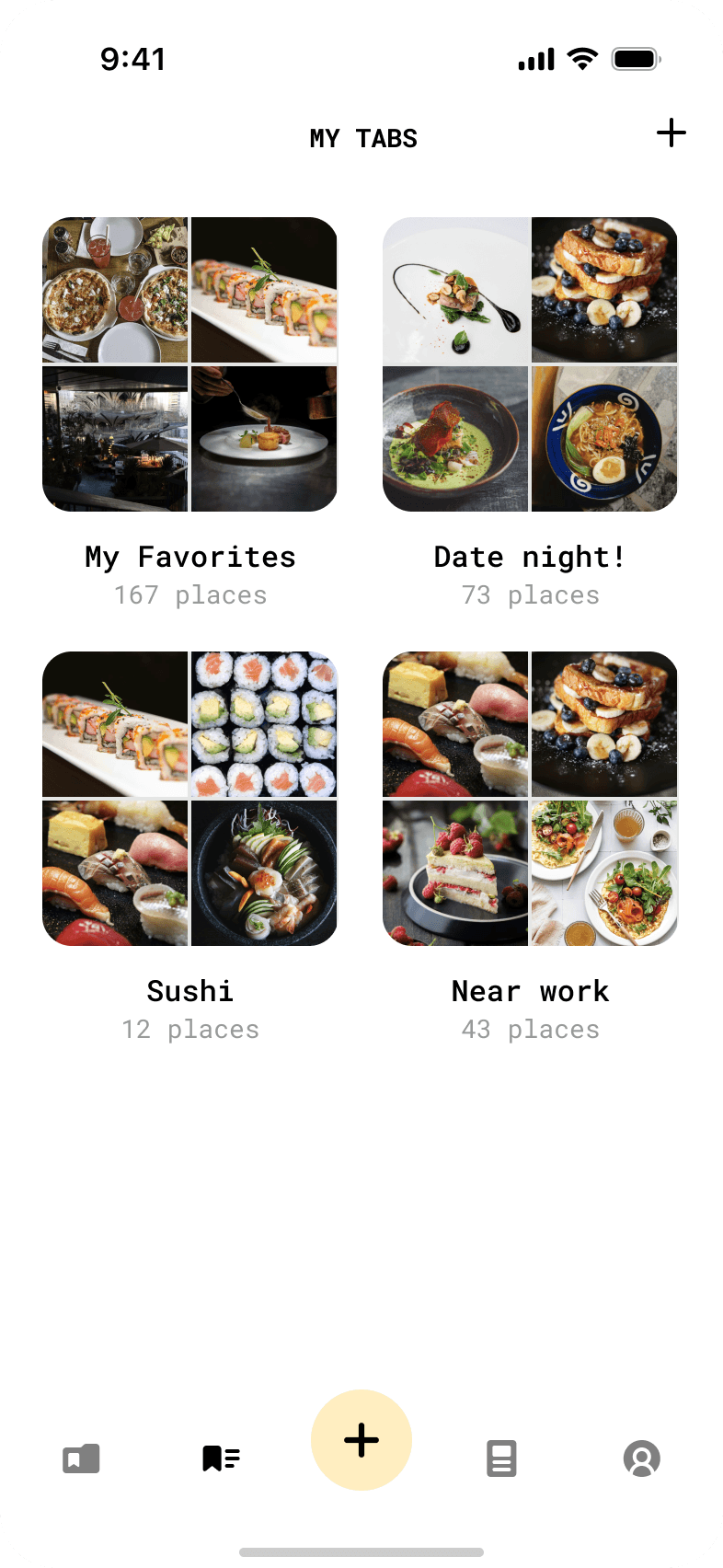
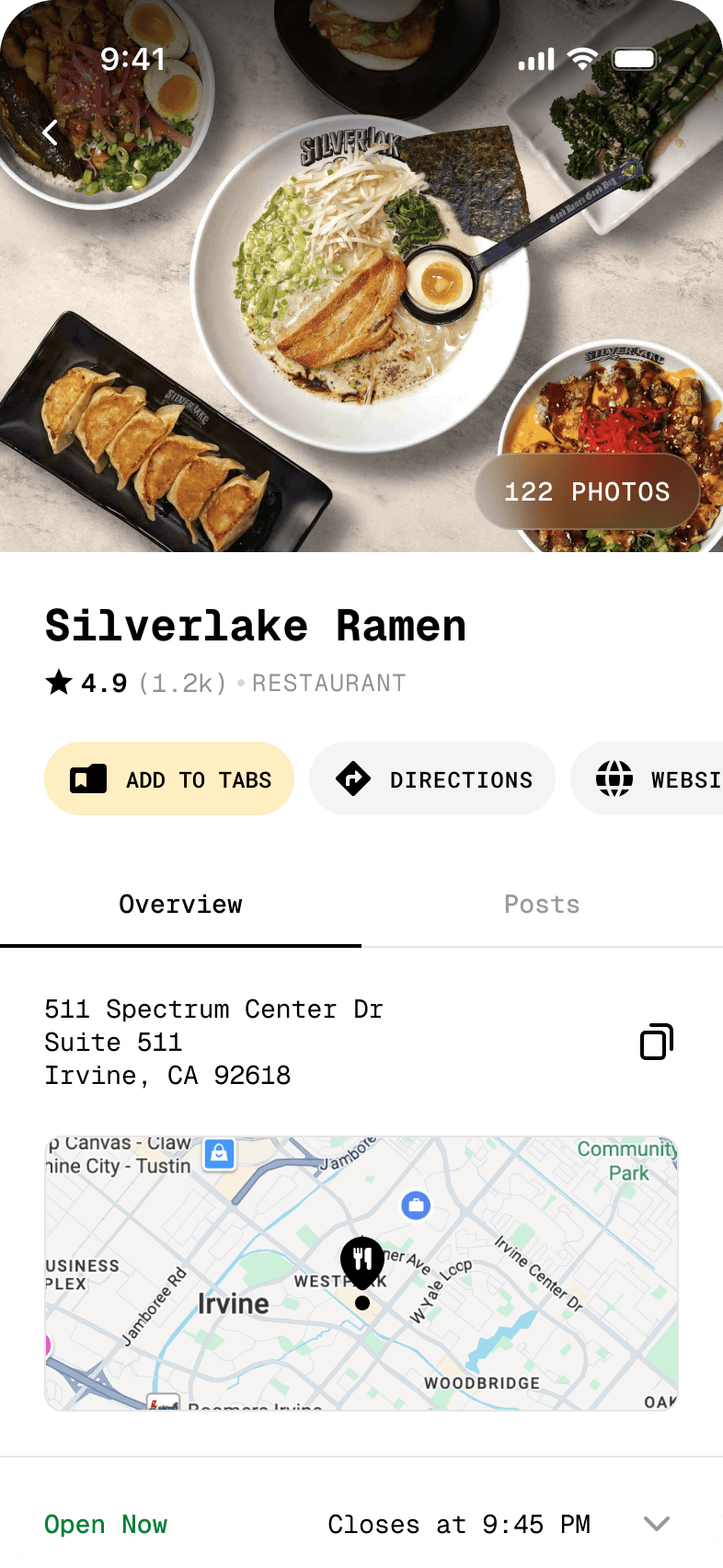
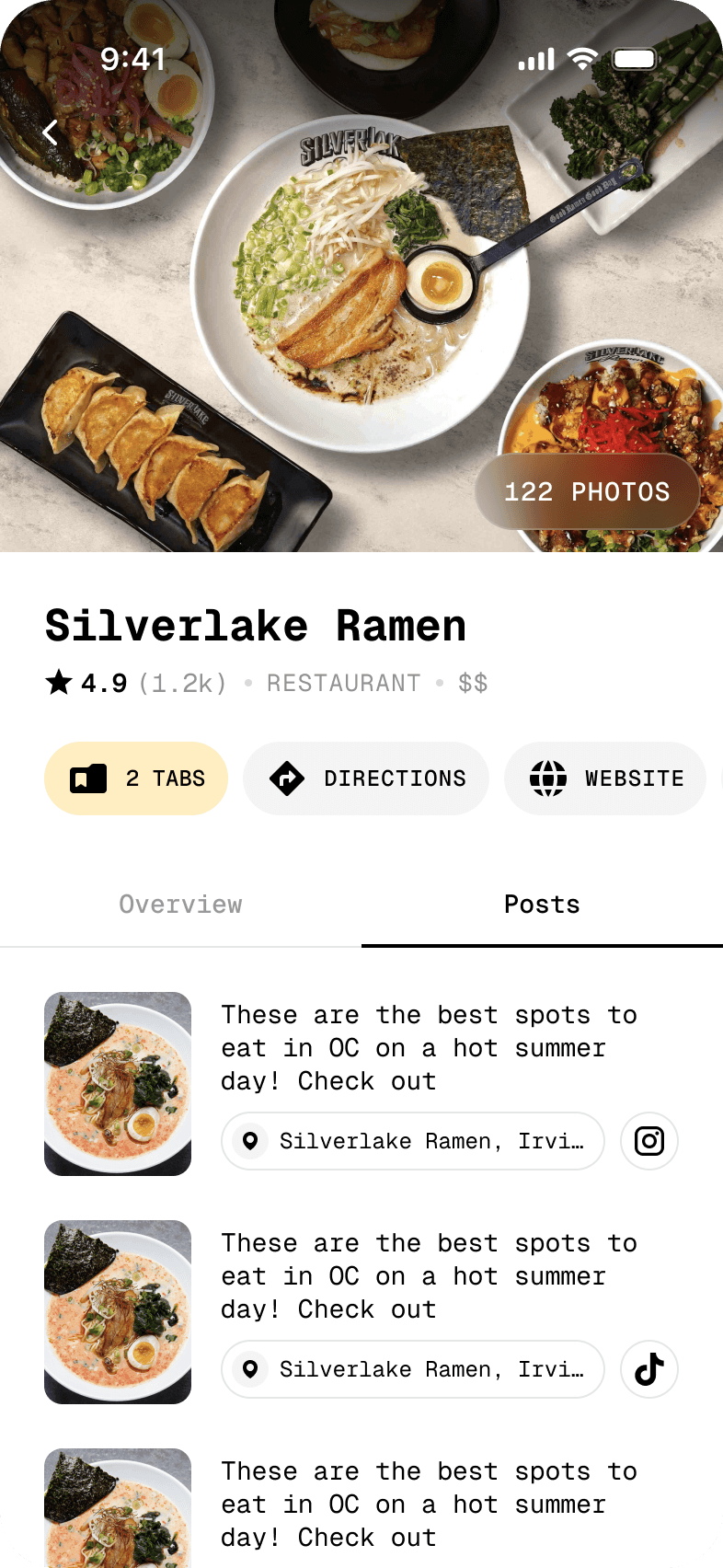
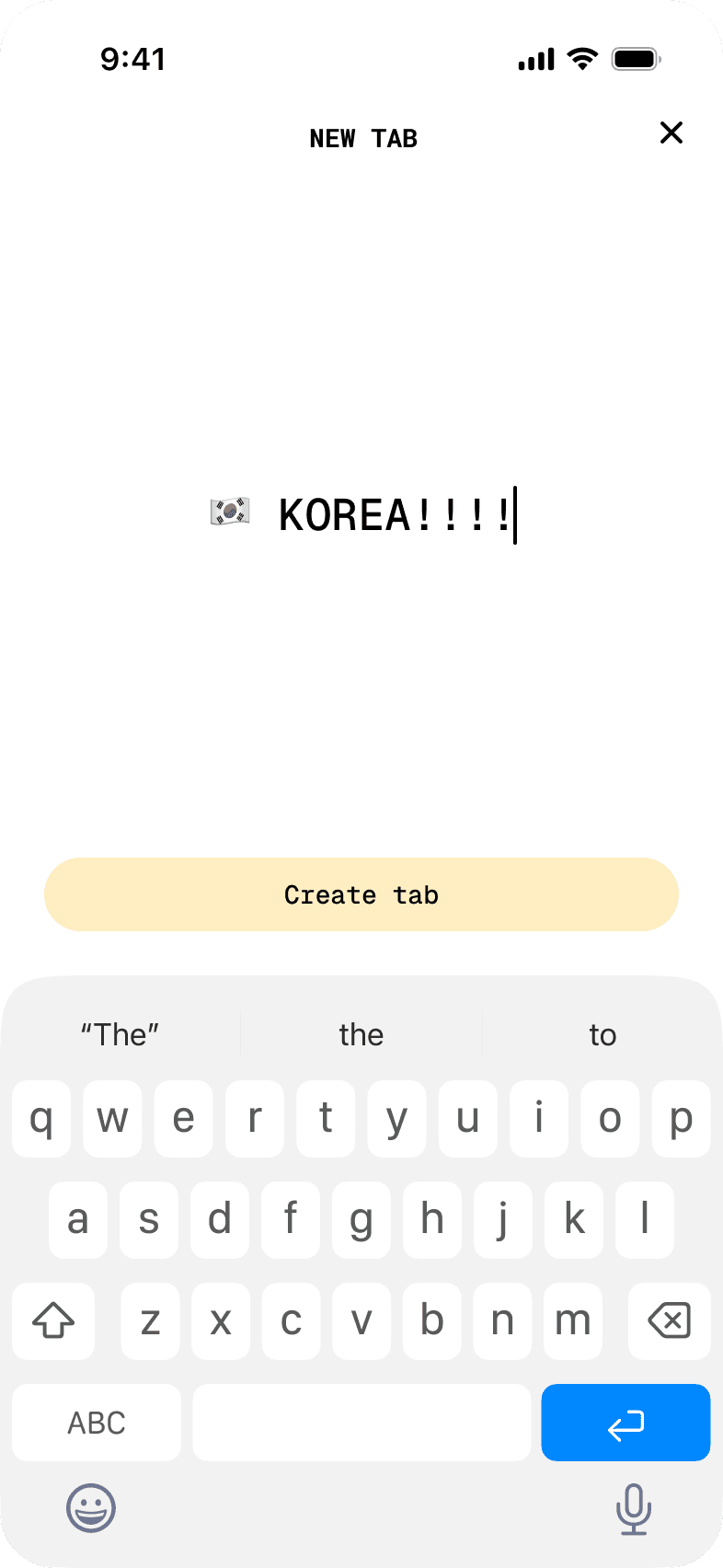
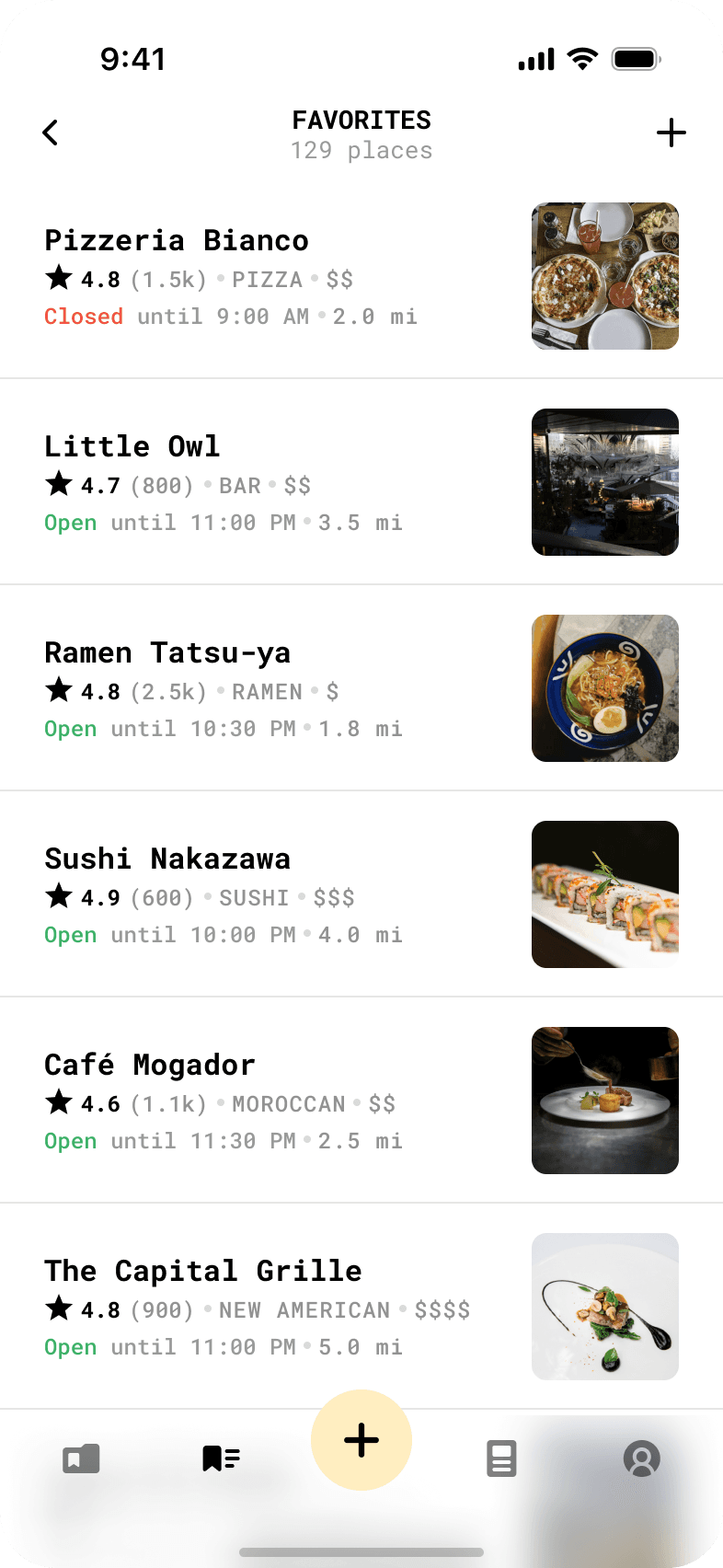
What's happening with Tabi now?
My small team worked quickly and swiftly to take our concept and turn it into a live first pass in about two weeks. At this very moment, we are making many adjustments to iterate to over 10,000 users. We're also exploring a new direction for the brand to create a fun and identifiable brand. I will update this page soon with some of those findings and fixes, so until then, please enjoy a sneak peek at the upcoming upgrades!